Ski Trips on a Thermos and a Bag of Rice
Five days in Niseko, ¥3,500 spent on eating out. An experiment in self-sufficient travel food.
Why I Brought My Own Food
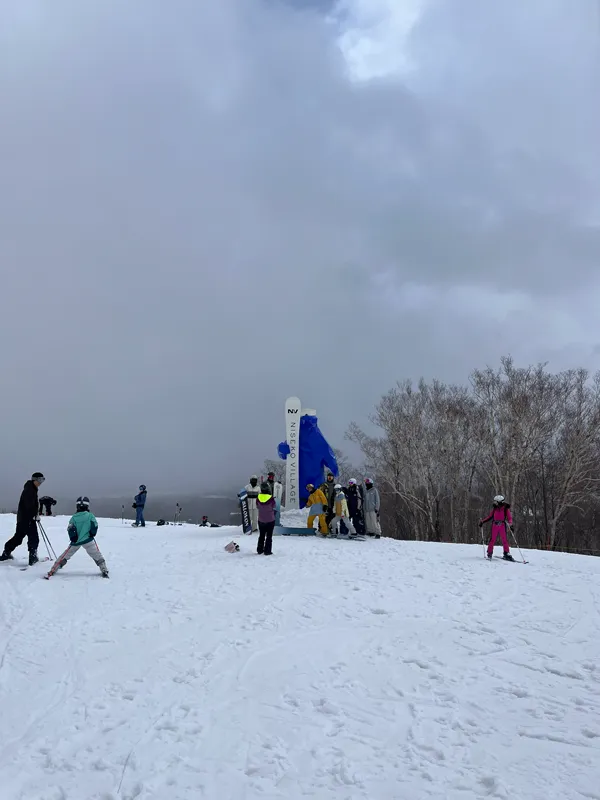
In late February 2026, I spent five days skiing alone in Niseko — a world-famous resort in Hokkaido, Japan. I stayed in a capsule hotel and brought almost all my food from home.
The reason is simple: ski resort food is expensive. After paying for lift tickets, spending 3,500 yen (about $22) or more on a single slope-side lunch is a real hit to the budget when you’re traveling solo.
That alone I could rationalize as “the cost of travel.” But there was another factor. I’ve been eating gluten-free for about six months. I have IBS, and cutting gluten has made a noticeable difference in how I feel and how well I can manage my appetite. I’ve given up on avoiding the wheat in soy sauce , is everywhere in Japanese food, but since I started last September, the effect has been real enough to keep me going.
The problem with dietary restrictions on the road is that every meal becomes a small investigation. “What’s in this? Can I eat that?” It eats into time you’d rather spend skiing, soaking in a hot spring, or just staring out the window at the snow. So I decided to take food off the decision list entirely — and bring my own.
A Day with the Thermos
The routine was simple.
Wake up in the capsule, pack rice into the thermos. Head to the hotel breakfast buffet, pour boiling water into the jar, eat. After breakfast, swap out the water with a fresh pour from the hot water dispenser.
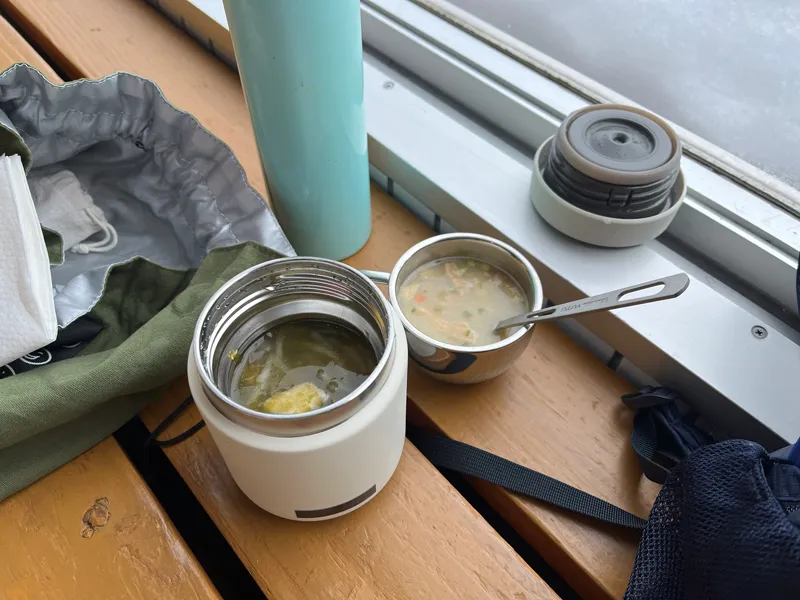
At noon, the thermos goes in the backpack. Instead of queuing at the packed resort restaurant, I eat porridge in the rest area. Wrapping cold hands around the warm jar is oddly satisfying. I felt a little self-conscious at first, surrounded by people with trays of ramen and curry rice — but that passed quickly. By day two, it was just lunch.
Evenings, I’d come back to the hotel and eat from a second batch prepped that morning.
What surprised me was how well my body responded. No midday slump, no that vague “too heavy, too empty” drag. When your blood sugar stays steady, your legs tend to follow — and there’s less mental noise getting in the way of actually skiing.
What Went Wrong, Then Right — The Method
It took a few tries to get the porridge right.
What didn’t work
- Preheat the thermos (400ml) with boiling water for 5+ minutes
- Discard the water
- Add cold ingredients: brown rice (about 2 tablespoons), millet, dried daikon, freeze-dried tofu, etc.
- Pour in boiling water
- Wait a few hours
Result: undercooked, slightly crunchy porridge. I failed three or four times. Preheating longer didn’t help. Reducing the dried ingredients didn’t help either.
The problem was simple in hindsight: putting cold ingredients into a preheated jar drops the internal temperature immediately. The boiling water you add afterward can’t recover it.
What works
- Put the ingredients directly into the thermos
- Pour in boiling water
- Preheat for 5+ minutes — with the ingredients inside
- Discard the water ← Tilt the jar with the lid cracked open; the liquid drains out surprisingly easily without losing the solids
- Pour in fresh boiling water
- Wait a few hours
One change, completely different result. The jar stays hot longer, and the rice and millet cook through properly. The key is to preheat the ingredients along with the jar.
What I Packed
Staples
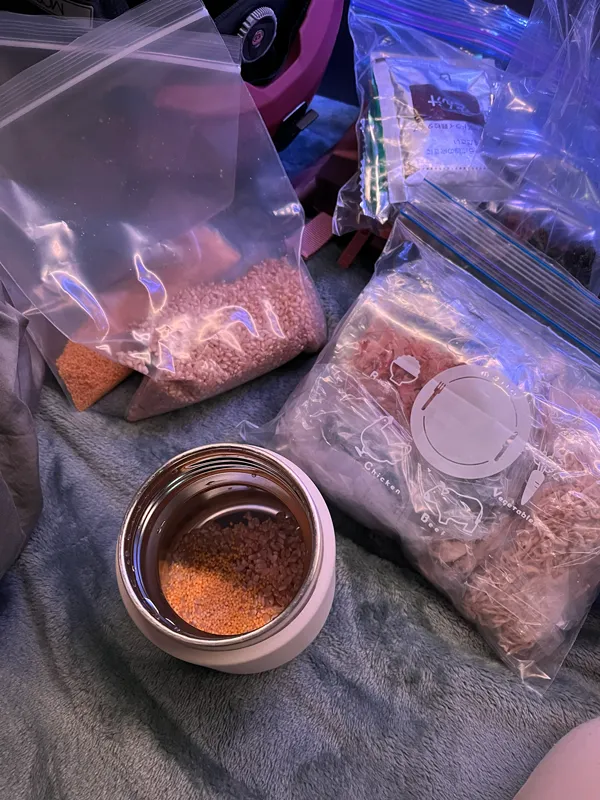
- Brown rice and millet — enough for 7 meals (the same bag volume would have fit maybe 3 pre-cooked rice packs)
Dried ingredients
- Dried daikon strips, freeze-dried tofu, wood ear mushrooms, dried shiitake, nori
Seasoning
- Uyuni salt lake salt, carried in a small BPA-free bottle
- MUJI instant miso soup (the pork and vegetable flavor is my go-to)
What I wish I’d brought
- Pickled things: umeboshi (pickled plum), salted kelp, glass noodles
Umeboshi and salted kelp are made for rice porridge. I survived on the saltiness from the miso soup, but pickles alongside would have made it. Something to fix next time. Glass noodles would also have been a lightweight option for a change of pace.
One more thing worth noting: bulk. Dried grains and vegetables are incredibly compact compared to pre-cooked rice packs. Seven servings of brown rice and millet fit in a corner of my suitcase — the equivalent in packaged rice packs wouldn’t have fit at all.
A Nod to Old Ideas
On day four, while prepping my morning porridge, I caught myself thinking.
Rice keeps at room temperature. Dried foods travel well. Pickles exist precisely because someone needed food to last on a long journey. None of this is a coincidence — these are foods that generations of people refined specifically so they’d survive travel and time.
What’s new is the thermos. Just a well-insulated container. Everything else? Same as it’s always been. Boil water, add ingredients, seal the lid. No fire, no kitchen required. Fantastical!
The Experiment: Results
Five days in Niseko. I ate out four times: soba with a friend on day one, mackerel miso set on the first evening, a sashimi lunch on day three, and a limited-edition ice cream at the airport on the last day. Total spent on eating out: around ¥3,500 (about $22).
Including the hotel breakfast buffet, I ate out seven times total. The remaining eight meals came from my bag.
Because I wasn’t eating out every day, each restaurant meal felt like an occasion. I actually paid attention. Eating out less made eating out better.
Call it budget travel if you want — but what I took from this experiment goes beyond cost. When you control your food on the road, one source of anxiety disappears. And there’s something quietly satisfying about sitting in a ski resort rest area, eating porridge you made yourself, and thinking: this is basically what travelers have done for centuries.
I want to try this on an international trip next. Local food is part of the experience, and I’ll still eat it — but having a reliable, cheap nutritional base that I control, wherever I am, makes the whole thing feel more manageable. As long as I can get hot water, I’ll be fine.